Nessie

Your music, on your own server, for the whole household.
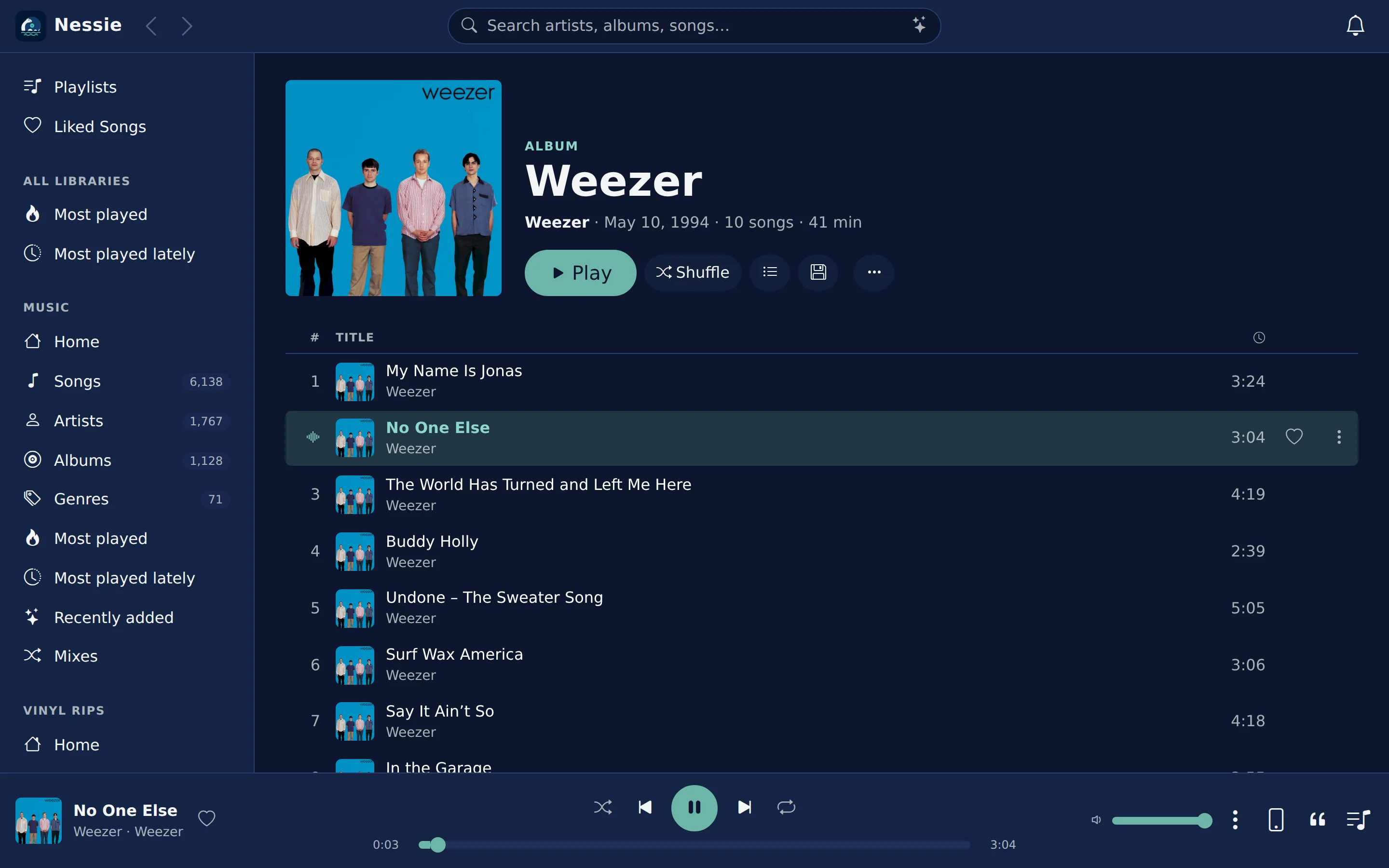
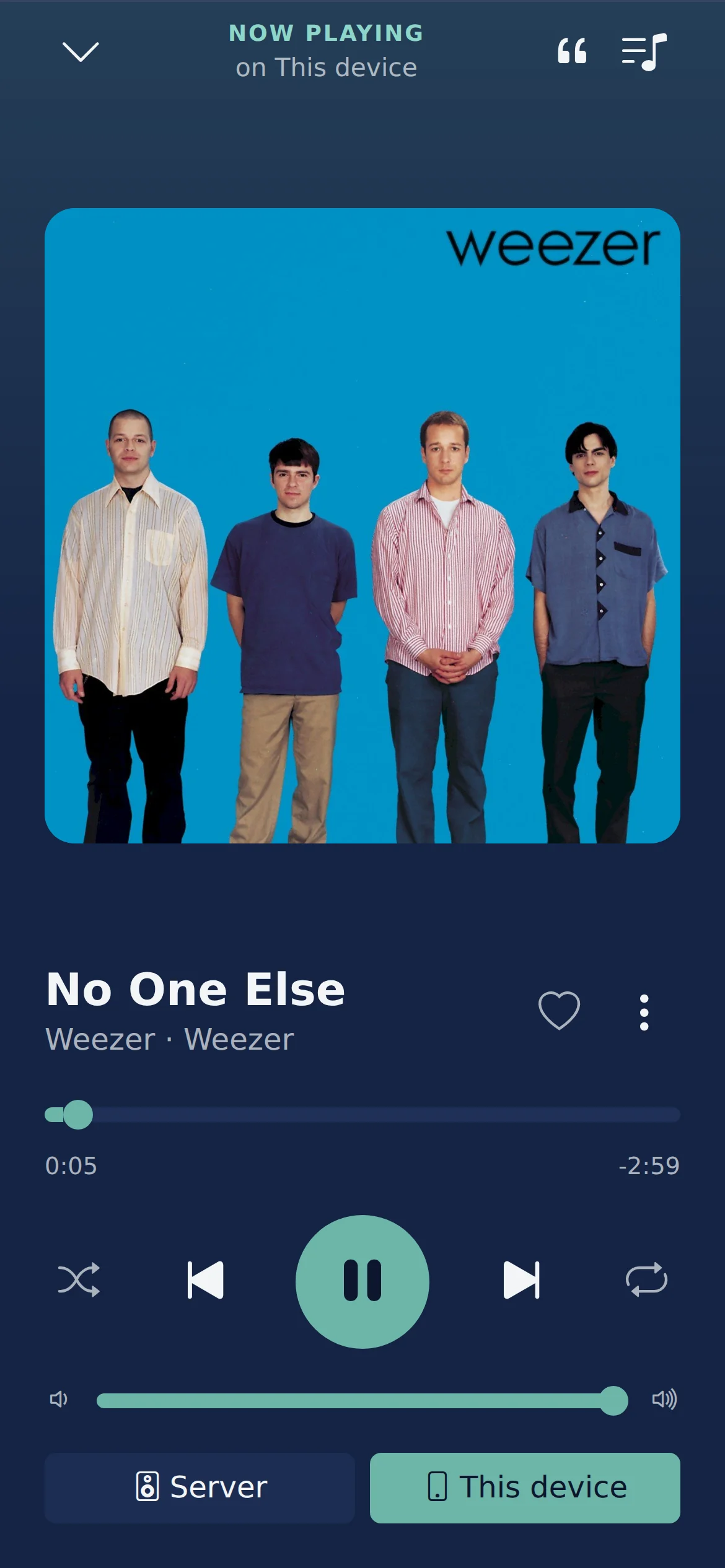
Nessie is a self-hosted music player for a Linux machine; a Raspberry Pi is the ideal cheap one. It scans your music folders into a library and serves a web app for phones and desktops, with Android and iOS apps around it. Play on the server's speakers, or on the device in your hand.
Install with Docker See the features
What it does
- Two outputs: the server's speakers (through mpv) or This device, with the same queue, shuffle and repeat on both.
- Profiles for a household: each person has their own playlists, liked songs, stats and libraries. At home a device asks "Who's listening?"; away, your sign-in service says who it is.
- Playlists, liked songs and mixes: smart playlists, daily mixes per genre and decade, mixes from your own rules, and, optionally, playlists Claude picks from a description.
- Offline: download albums and playlists, and the songs you play are kept, so a patchy connection doesn't stop the music.
- Apps: Android (with Android Auto) and iOS (with CarPlay), each opening your own server.
- Your library, filled in: covers, artist photos and album details from MusicBrainz, Fanart.tv and Wikipedia; lyrics; requesting music through Lidarr; importing playlists from Spotify and other apps.
- Yours: no accounts with anyone, no tracking, and the web app works on a network without internet.
Where to start
- Installation: Docker Compose, or without Docker
- Configuration: every setting
- Profiles and sign-in: for a household, at home and away
- The apps: Android and iOS
- Development: working on Nessie, and the Field Guide to its code
Nessie started out as NSY ("Not Sure Yet"), and the short name still shows up in the code as a homage.